Free shipping on all international orders over £100
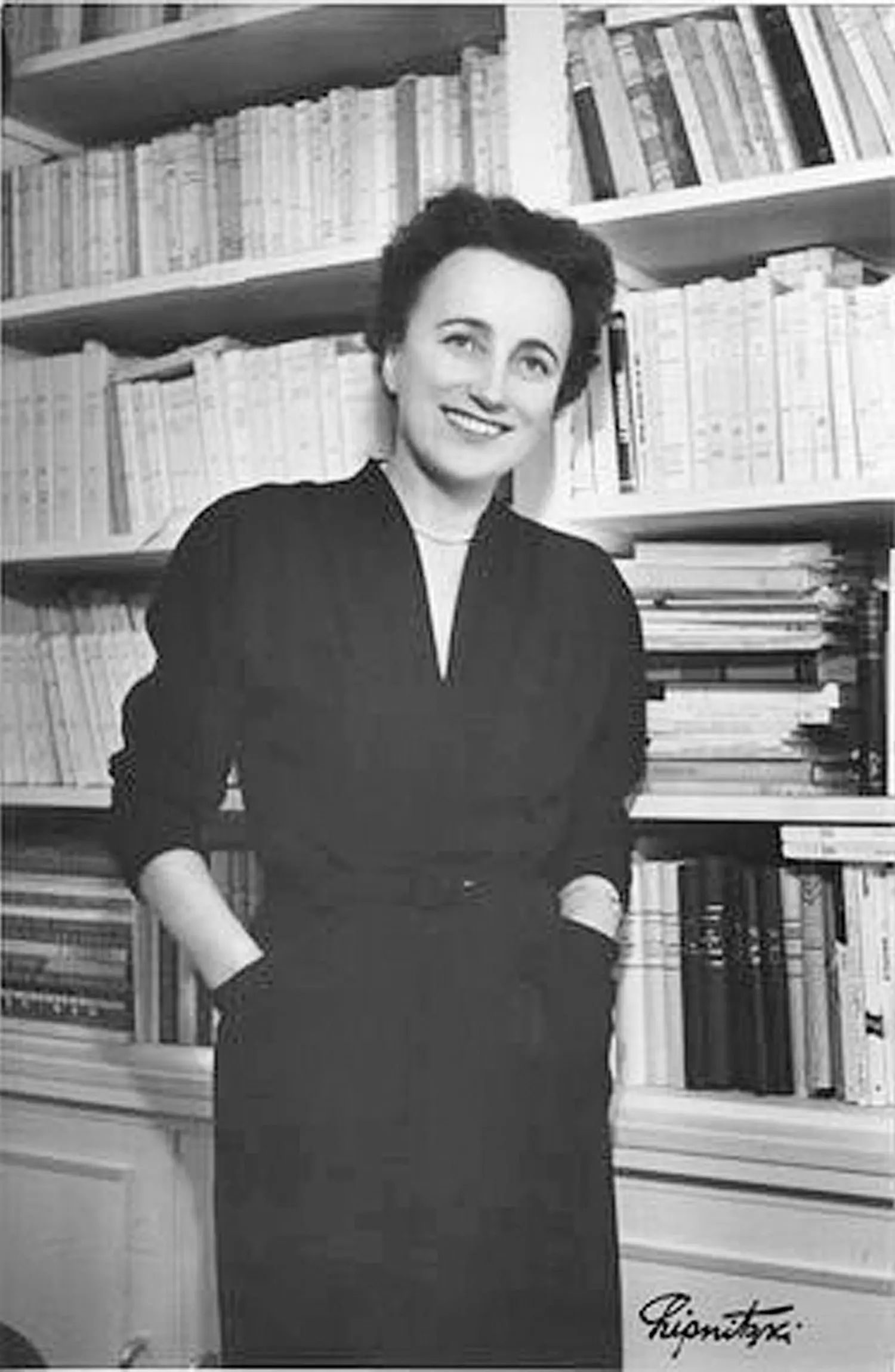
JOUISSANCE was sparked by the words of women who taught us to desire. Our fragrances are unapologetically feminine, evocative of the literary and sensual interior lives of women who held up a mirror to their secret selves and erotic discoveries, their intense pleasures and pains. This Women’s Month, we’re taking a moment to celebrate the three iconic female writers behind the JOUISSANCE scents – scroll for the second in the series, LA BAGUE D’O muse Pauline Réage, AKA Anne Desclos
"One day a girl in love said to the man she loved: "I could also write the kind of stories you like..."” So begins the writer’s own account (published as ‘A Girl in Love’, the preface to Story of O’s sequel Return to the Chateau) of how an unassuming editor and translator, too discreet even to sign her real name to her essays, journalism and works of literary criticism, wrote the most famous and enduring erotic novel of all time.
As well as being married, Paulhan was a ladies’ man and a fan of the debauched tales of the Marquis de Sade. Desclos was in her 40s (hardly the ‘girl’ she describes herself as), in her own words “not pretty” and worried about losing his attention. When he sneered at her claim that she could, “write the kind of stories you like” she took it as a personal challenge.
It took two years to find a publisher who would touch it, but eventually French publisher Jean-Jacques Pauvert (who made something of a specialism of standing against accusations of obscenity) and Olympia Press (publisher of Lolita) both published it 1954.
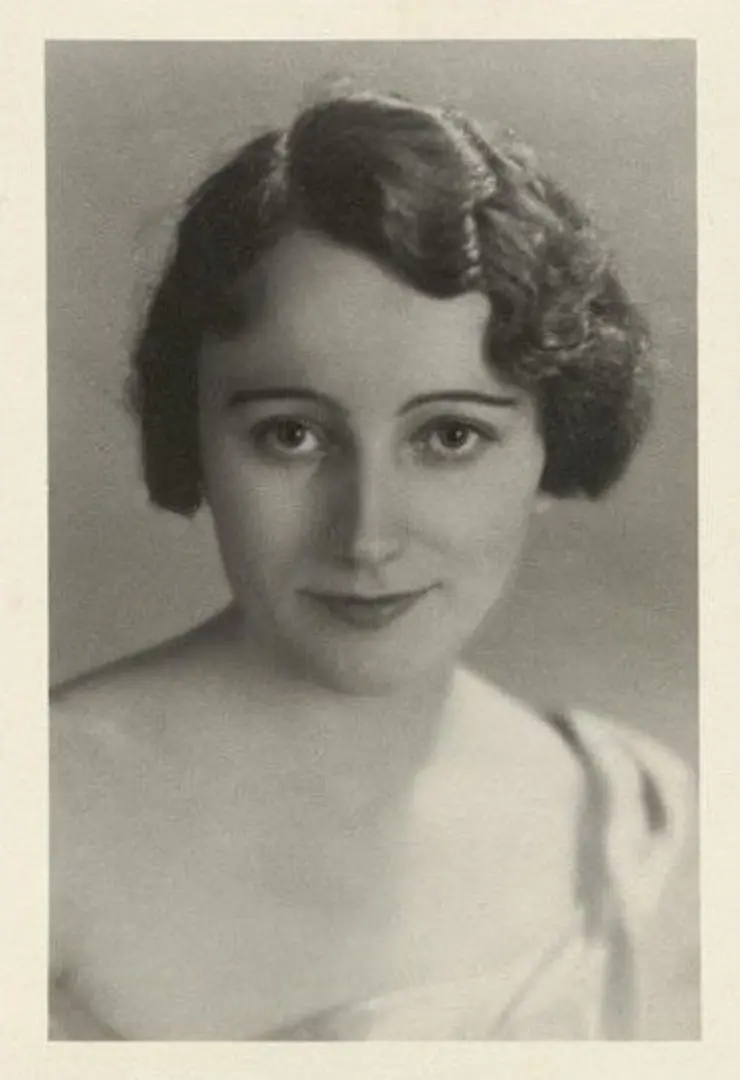
Anne Desclos photographed in 1929 at the age of at 21
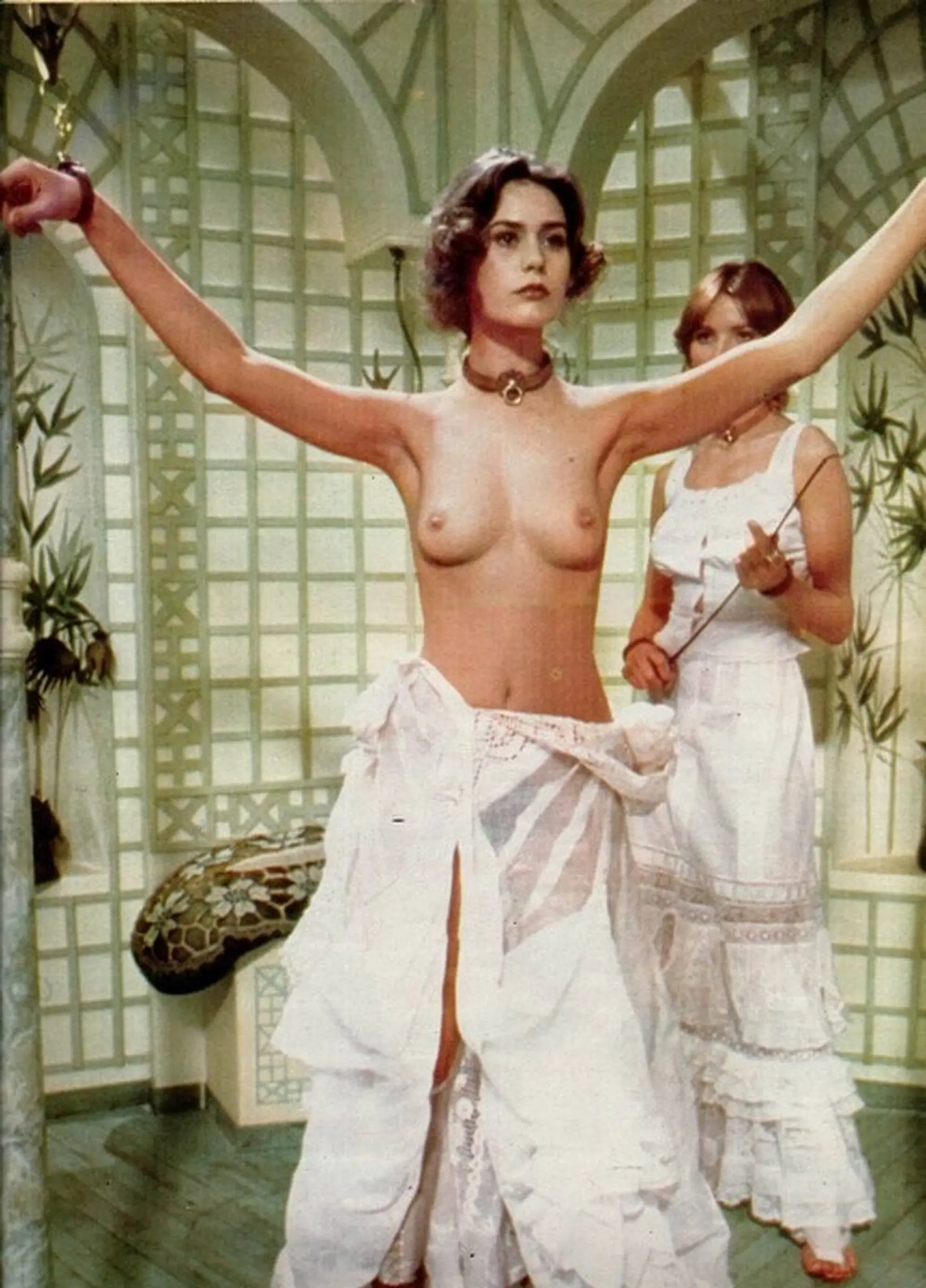
Still from Histoire d'O (1975), dir. Just Jaekin
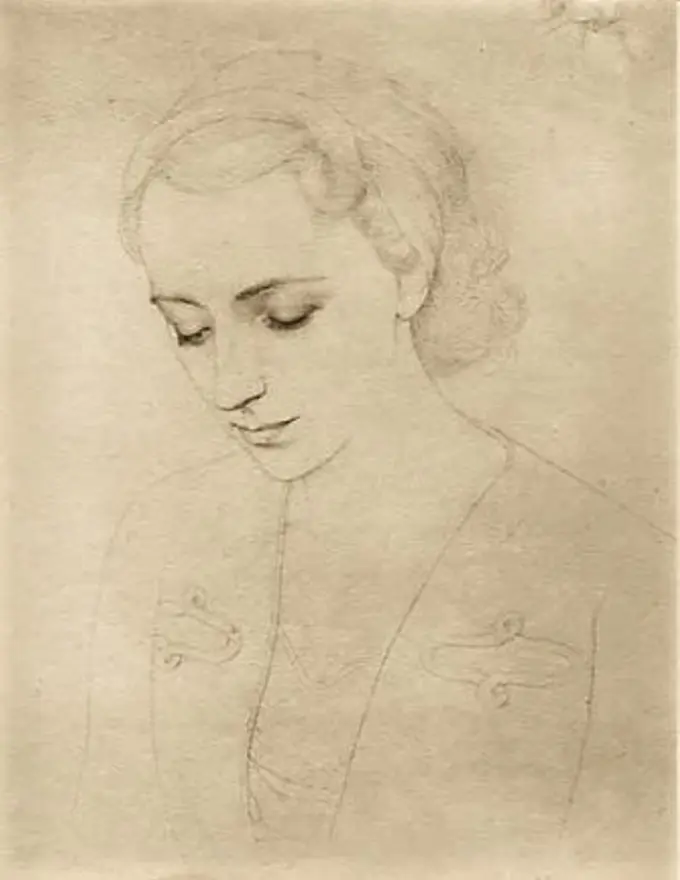
A 1942 drawing of Declos by Bernard Milleret
But behind the often-told tale of a woman seducing her lover through erotica is another love story. In many ways, the most romantic and enlivening detail of Reage’s account is the nights she spent in a fever – not of love making – but of writing.
An orgasmic, ecstatic flow of creativity is something all writers long for, but it’s rarely bestowed on us, thanks to the pressures of deadlines, debts and the ever-present inner critic. Desclos had it for those precious few nights, and perhaps that’s one reason for Story of O’s seemingly eternal afterlife. The legend may tell us that she wrote the book for her lover, but for those hours, it’s clear she wrote only for herself.
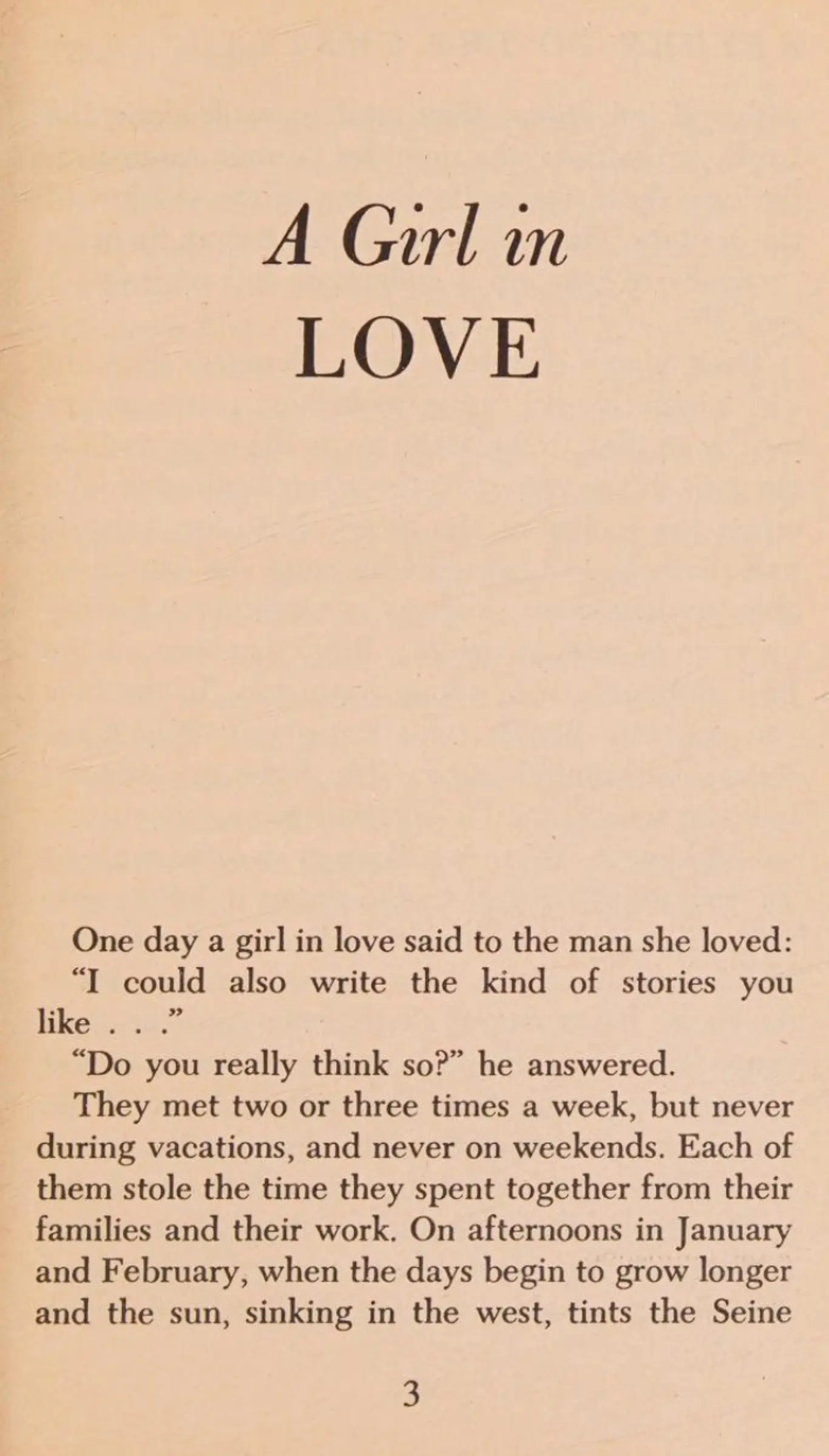
‘A Girl in Love’ by Pauline Réage
For Story of O, Desclos chose a new pseudonym. She discovered the name Rèage in a real estate register, and borrowed Pauline from "two famous profligates": Napoleon's youngest and favourite sister Pauline Borghese and the early French feminist and socialist Pauline Roland. Her nom de plume not only protected her reputation in professional and literary circles, it also shielded her from the Brigade Mondaine, the French vice squad.
Shortly after writing the book, Desclos attended a dinner party at which Story of O was the hot topic of conversation. “People who write that [sort of thing] are very ill”, her friend’s date declared. Desclos stayed silent. With no face to the name, speculation grew that the book could only have been written by a man, with some guessing that Desclos’ lover Paulhan was the true author. By the 60s, a small circle knew the truth, but kept the secret among them. Finally, in 1994, Desclos allowed the journalist John De St. Jorre to reveal her professional name, Dominique Aury, in the New York Times.
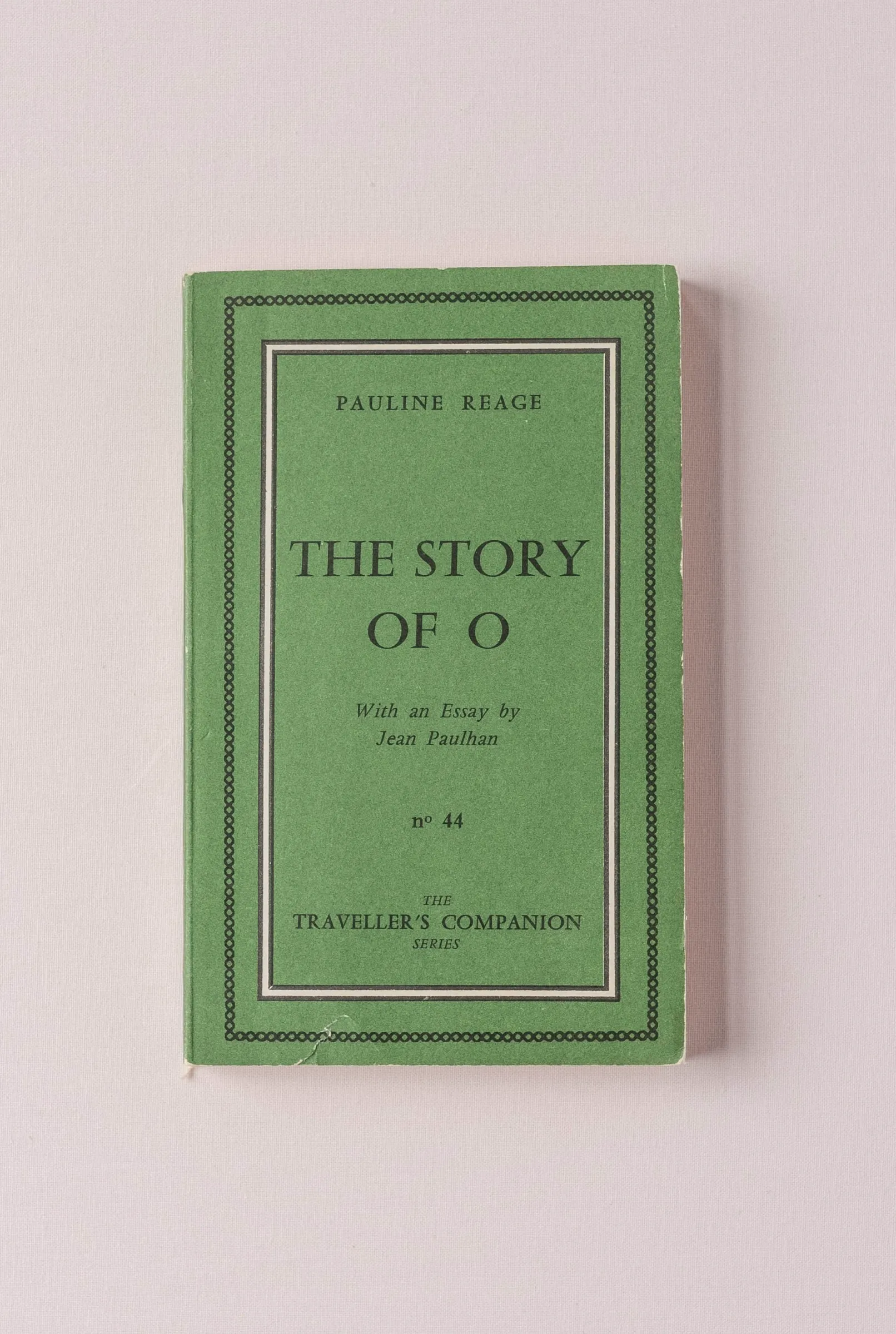
An Olympia edition of Story of O, from the JOUISSANCE Bookshop
In her own words, from a 1979 interview, Desclos connected the secrecy of illicit love affairs to the childish instinct “to have, in the woods, or at the bottom of the garden, a place no-one knows they go to and where they meet.” She also admitted she experienced a gulf between her desires, and what she was willing to allow herself in real life: “I was capable of telling myself stories, to stick my neck out a bit, but apparently, I was unable to act.”
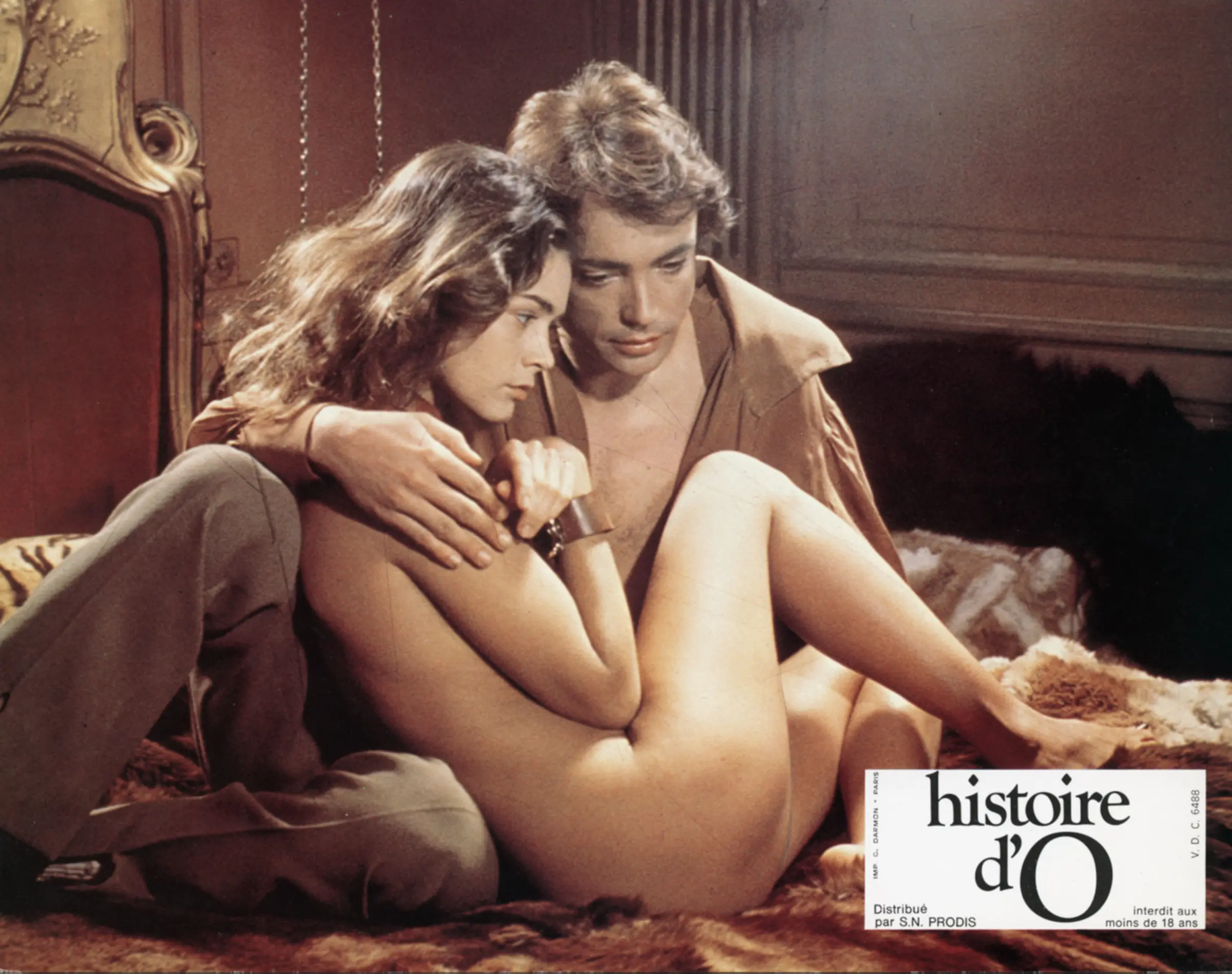
French lobby card from Histoire d'O (1975), dir. Just Jaekin
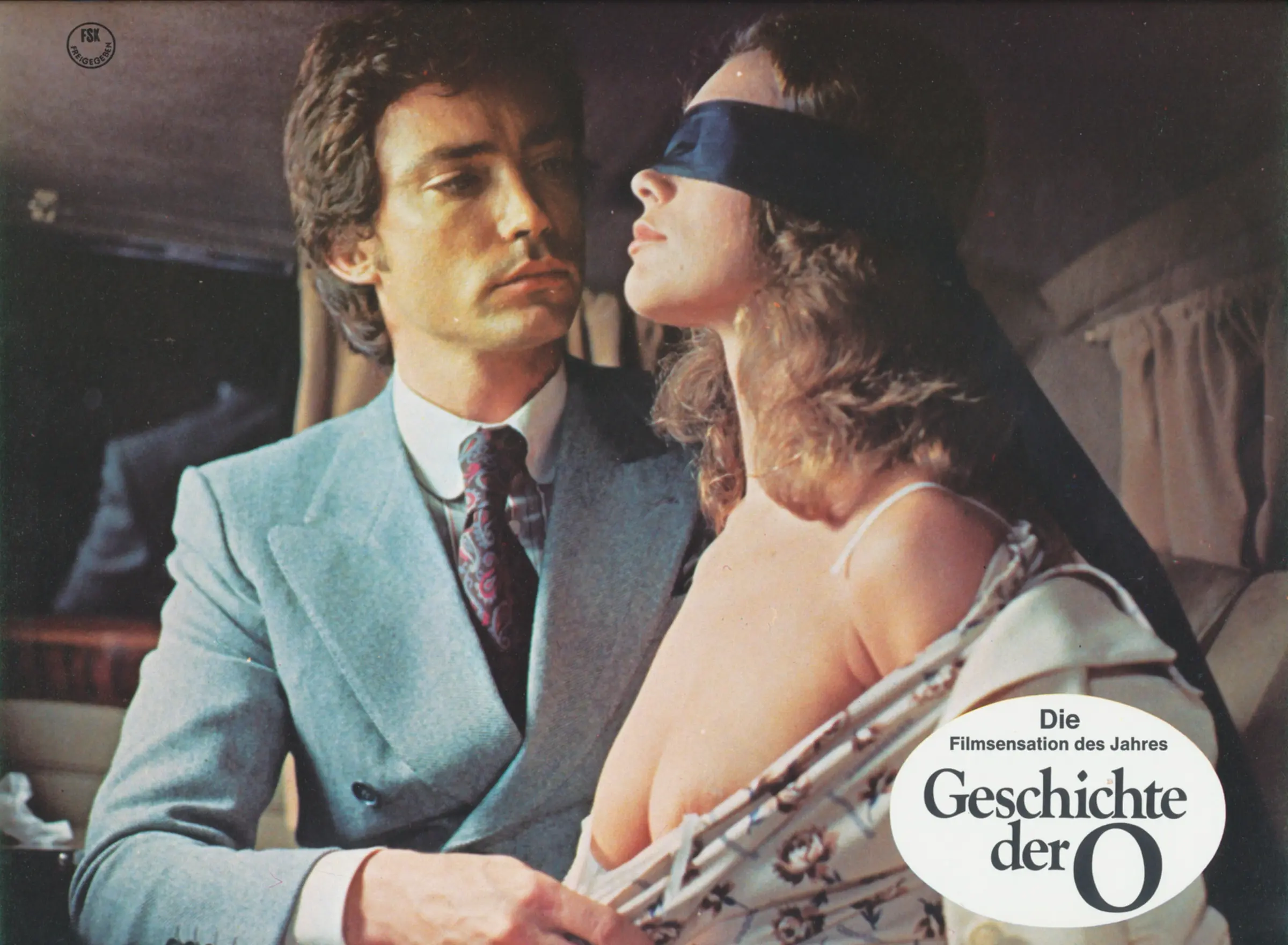
German lobby card from Histoire d'O (1975), dir. Just Jaekin
In Story of O, a young woman known only as ‘O’ goes for a drive with her lover, and is taken by him to a mysterious chateau in the countryside. There, she is initiated into a clandestine society where women are trained to become objects of sexual service. O consents to this, and the narrative carefully traces her progression: she is stripped of autonomy, subjected to rituals, marked, and conditioned to exist entirely for the desires of others. In her ‘sacred submission’ she finds true freedom. It’s a story that continues to provoke strong reactions, from the scandal it evoked in 1950s society, to its rejection by some second-wave feminists.
A woman’s eye for pretty detail decorates the extreme acts of Desclos’ story. Characters, spaces and garments are all painted in the same romantic strokes – a woman who looks like “a girl-from-the-land-of-snow”, “an enormous bouquet of chrysanthemums...smelling of earth and leaf mold”, a dress made of “stiff, crackling silk”.
At Roissy, O had learned not to be in a hurry: she perfumed herself three times, each time letting the perfume dry on her body. First she put on her stockings, then her high-heeled shoes, then the half-slip and the skirt, then the jacket. She put on her gloves, took her bag... She sat down on the edge of the bed and, her eyes fixed on the dial of the little clock, in perfect stillness awaited the sound of the doorbell.
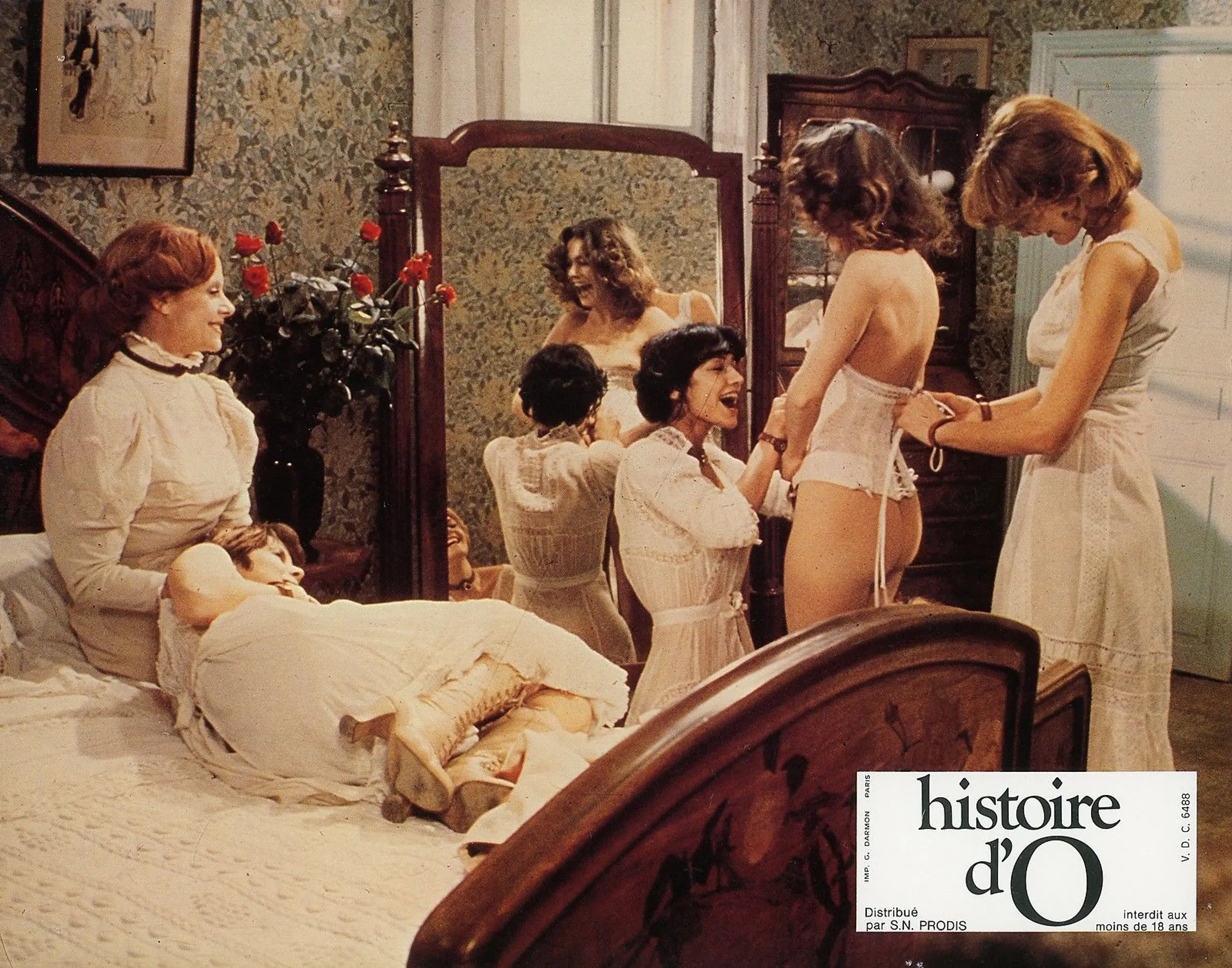
French lobby card from Histoire d'O (1975, dir. Just Jaekin
“What we want to hold on to, we must pay for. We pay with silence, we pay with patience, with obscurity.”
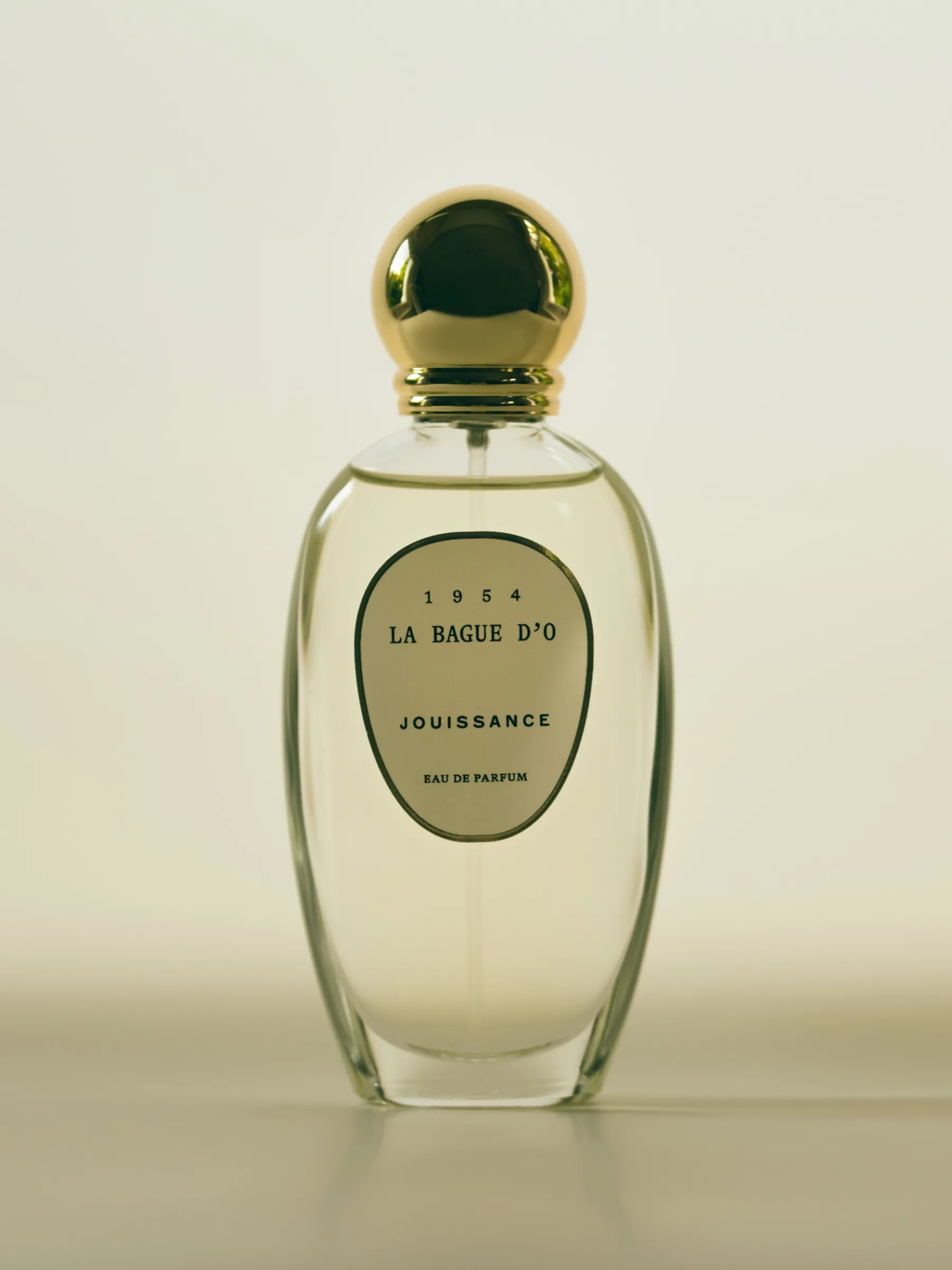
Beguiling, intoxicating, romantic.
A bruise-coloured bouquet.
"It was while writing a Diary that I discovered how to capture living moments," Anaïs Nin wrote. "In the Diary I only wrote of what interested me genuinely, what I felt most strongly at the moment, and I found this fervour, this enthusiasm produced a vividness which often withered in the formal work. Improvisation, free association, obedience to mood, impulse, brought forth countless images, portraits, descriptions, impressionistic sketches, symphonic experiments, from which I could dip at any time for material."
In tribute to Anaïs Nin, one of our foremost inspirations for Jouissance, our DIARY captures our most treasured moments, our obsessions and preoccupations, our research and the lessons we learn, and the work of our cherished friends and collaborators.