Free shipping on all international orders over £100

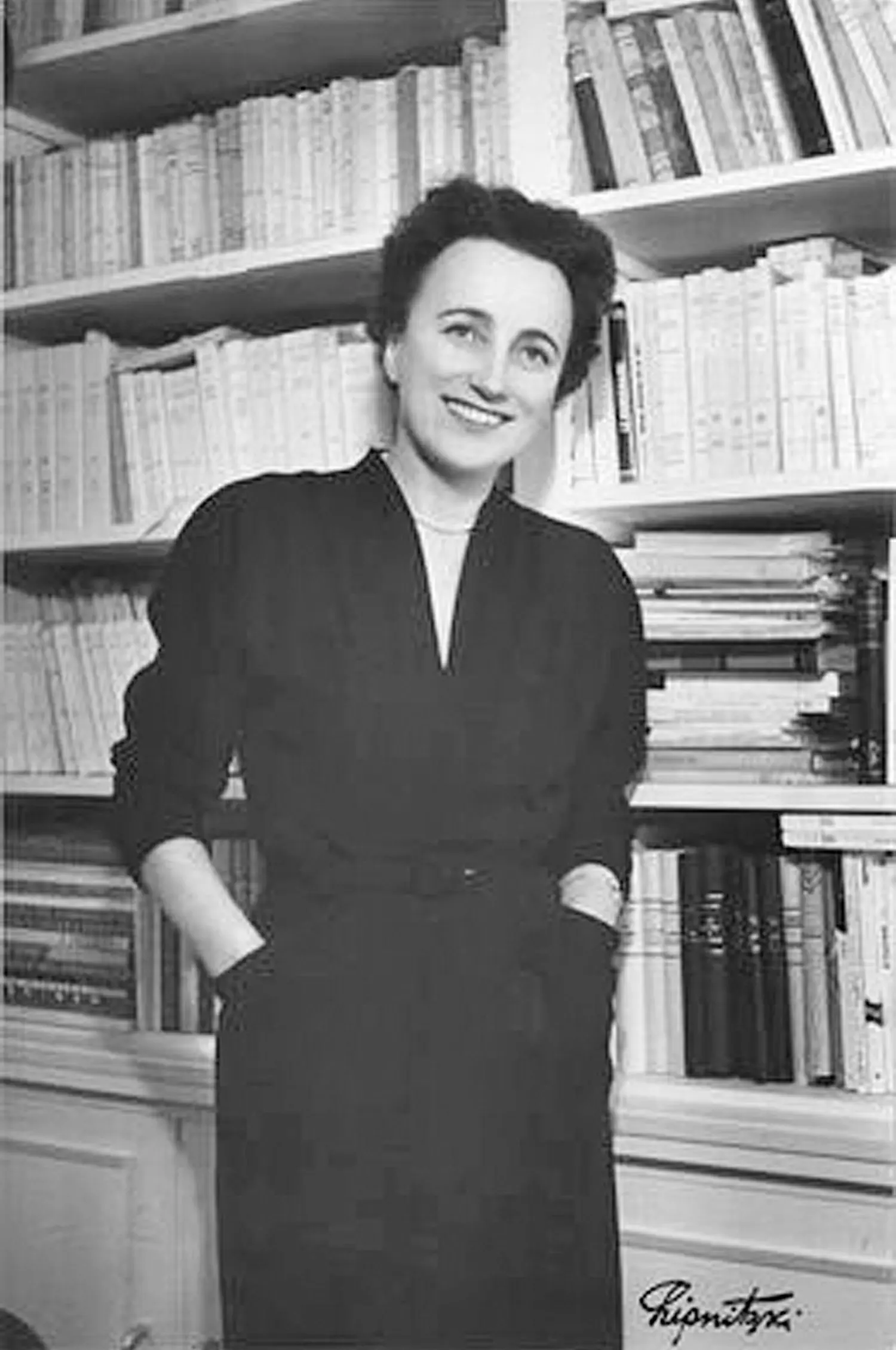
JOUISSANCE was sparked by the words of women who taught us to desire. Our fragrances are unapologetically feminine, evocative of the literary and sensual interior lives of women who held up a mirror to their secret selves and erotic discoveries, their intense pleasures and pains. This Women’s Month we’re taking a moment to celebrate the three iconic female writers behind the JOUISSANCE scents – first up, LES CAHIERS SECRETS muse Anaïs Nin.
Anaïs Nin’s longest relationship was arguably with writing itself. A diarist since the age of 11, she began in 1914 around the time her father, the Cuban pianist and composer Joaquín Nin, left the family home in Paris. Writing in her journal – in French, until she was 17; in English thereafter – was her refuge and “the only steadfast friend I have”. Using it as a space to workshop herself and capturing those in her orbit, the French-American writer amassed 150 handwritten notebooks archiving her thoughts, her successes, failures, fears, fantasies, love affairs, travels, and hunger for more life experience.
Here, she could write freely and with wild abandon. Uncensored. Without a brief and the specific dread that came with writing for public consumption (in 1932, she wrote that she was terrified of her “conscious work”, concerned because whatever work she created without feeling lacked any real value for her).
It was these private journals that would – at the age of 66 – cement her status as a literary icon after years cast as an underground author, with the publication of the edited pages of Diary of Anaïs Nin by Harcourt Brace in 1966, and later on the seven volumes that span the years 1931 to 1974, at a period when such candid and confessional writing was revelatory. Finally Nin was recast: as an artist, a writer, a sensualist and a woman whose truth was oftentimes more wildly imaginative than fiction.

Anaïs Nin at her Silver Lake home. Via the Anaïs Nin Foundation

First edition of The Early Diary of Anaïs Nin, Vol. 4, available to purchase at the JOUISSANCE bookshop
Even in moments of hardship, Nin was well versed in the art of romanticising the everyday. Enjoyment was an essential part of her existence. Engaging with all her senses to feel more present, to feel more pleasure, to, simply, feel. Seeking out pockets of joy, whether it be a good coffee or adorning herself in silk stockings or her favourite perfume. “Luxury is not a necessity to me,” she wrote, “but beautiful things are.”
Spring evening, soft and balmy and beautiful. The smell of the earth rose in the stillness like a dream cloud.
― Anaïs Nin, The Early Diary of Anaïs Nin, Vol. 1: 1914-1920

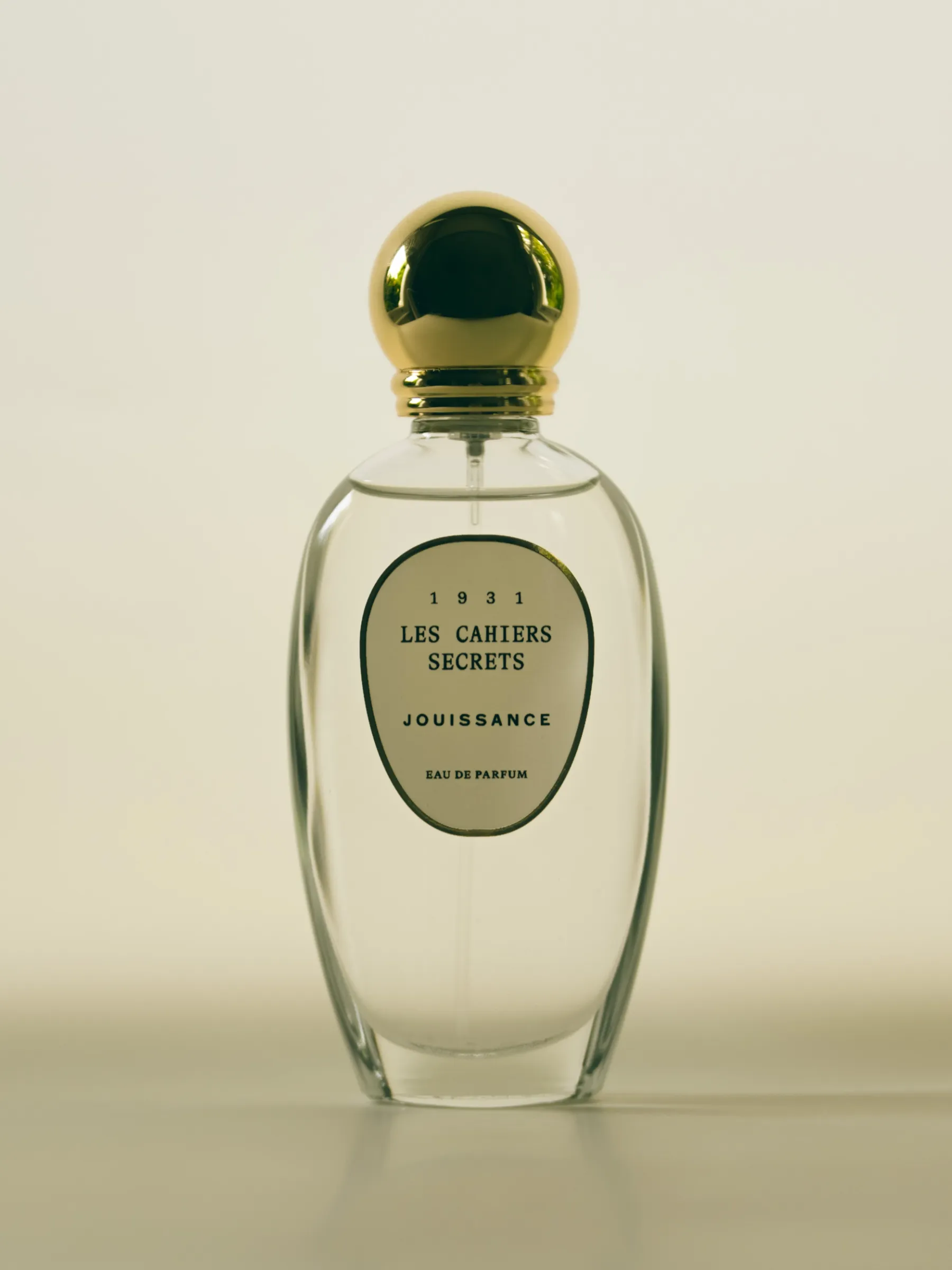
LES CAHIERS SECRET by JOUISSANCE, inspired by the sensual and intellectual life of Anaïs Nin
Nin was masterful at writing sex scenes that were adventurous, lyrical and intimate, illuminating the female experience. This was true for both Anaïs Nin The Novelist and Anaïs Nin The Diarist, whose writing across both genres documented, over the years, her own intense extra-marital affairs with both men and women.
I want to live only for ecstasy. Small doses, moderate loves, all half-shades, leave me cold. I like extravagance. Letters which give the postman a stiff back to carry, books which overflow from their covers, sexuality which bursts the thermometer.
Her relationship with Henry Miller is well documented in A Literate Passion, which archives their feverish 20-year handwritten letter exchanges. She also writes about her tangled love triangle with the writer and his wife, June Mansfield – who she describes as “the most beautiful woman on earth” in Henry and June (published in 1986, taken from her diaries).

A Literate Passion: Letters of Anais Nin and Henry Miller, 1932-1953

Henry and June film still (1990), by Philip Kaufman

Henry and June film still (1990), by Philip Kaufman
Paris was her playground, the place where she came of age. The setting for her own erotic and artistic journey, where simply walking its streets, drinking in its sights, sounds and scents served as a kind of creative remedy.
Nin and her husband would later move to a rustic dream house – a peaceful retreat from their 24 Boulevard Suchet apartment – with a wild garden in Louveciennes in the western suburbs of Paris. In Henry and June there’s a beautifully rich description of her garden in one passage, the visiting couple spellbound by the oddness of Louveciennes and “the smell of jasmine, the open fires in which I burned not logs but tree roots, which look like monsters.”

Anaïs Nin

Vintage copy of A Woman Speaks by Anaïs Nin, via the JOUISSANCE bookshop

Anaïs Nin’s personal library in her Silver Lake home in Los Angeles, photos by Chris Mottalini / via @tmagazine

90s Penguin edition of Little Birds by Anaïs Nin
In the early 1940s, in desperate need of money, Nin was commissioned to write erotic fiction for a private client known only as “the collector.” Their crucial editing note? “Concentrate on sex. Leave out the poetry,” much to Nin’s disgust.
It wasn’t until the 1970s she allowed her erotica – in Little Birds and Delta of Venus – to be released for publication to show the early efforts of a woman in a genre that had been the domain of men.
One short story in Delta of Venus opens with Linda, a married woman who accepts an invitation to a masked orgy. She observes ecstatic moaning, half-undone dresses, women caressing each other, the contours of unfamiliar bodies, heady desires taking over. Towards the end she becomes hypnotised by a stranger's scent, which reminds her of precious wood. “Waves of perfume dilated her body, opened it, prepared her to yield,” Anaïs wrote. “Her nerves were set for a climax, tense, responsive.”
Among her many passions, Anaïs Nin understood the sublime power of perfume. To seduce, to torment, to linger in a lover’s memory.

Henry Miller’s letter to Anaïs Nin in 1932
Warm, nostalgic, sensual.
A well-travelled writer's den.
"It was while writing a Diary that I discovered how to capture living moments," Anaïs Nin wrote. "In the Diary I only wrote of what interested me genuinely, what I felt most strongly at the moment, and I found this fervour, this enthusiasm produced a vividness which often withered in the formal work. Improvisation, free association, obedience to mood, impulse, brought forth countless images, portraits, descriptions, impressionistic sketches, symphonic experiments, from which I could dip at any time for material."
In tribute to Anaïs Nin, one of our foremost inspirations for Jouissance, our DIARY captures our most treasured moments, our obsessions and preoccupations, our research and the lessons we learn, and the work of our cherished friends and collaborators.