Free shipping on all international orders over £100

“Romance is the glamour which turns the dust of everyday life into a golden haze,” according to Three Weeks novelist Elinor Glyn. The sentiment resonates with us, rebelling against the myth of romance as something wholly bound to passionate love affairs and grand gestures alone, but rather grounded in a feeling that is more personal, rooted in finding presence and extraordinary beauty in the ostensibly ordinary.
For a special Valentine’s Day edition of our Diary this month, JOUISSANCE celebrates the literary muses and cultural heroines who revelled in romance – from Susan Sontag and her library of passions, to Virginia Woolf's nighttime strolls.
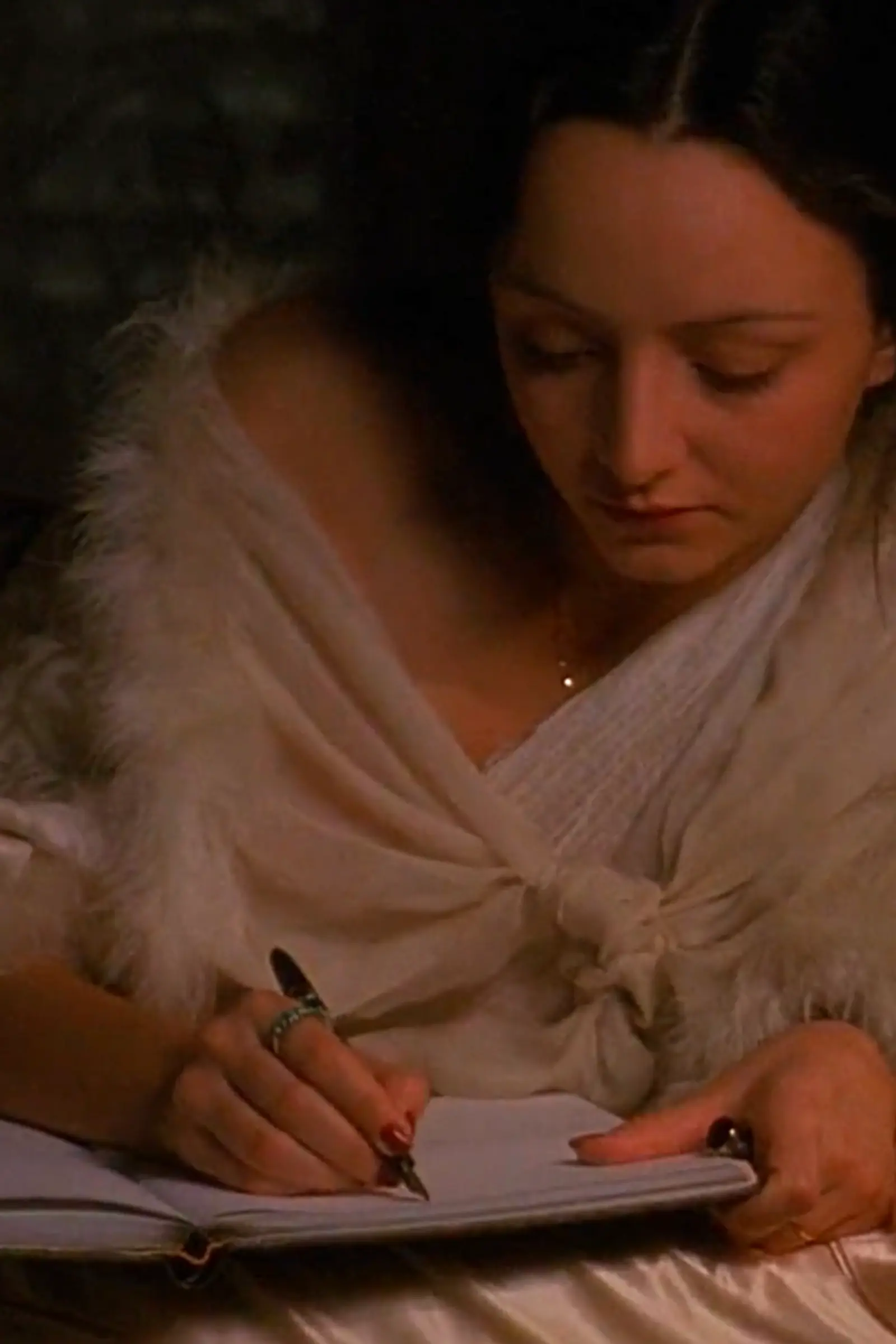
In recent years morning routines have morphed into something of a militant operation: fetishising 5am wake up times and working before the workday has even begun. If all this sounds exhausting to you, it is supposed to. Instead, do the opposite. Do less. Bathe in the little luxuries: turn off your phone, read a beautiful piece of prose, handwrite whatever instantly comes to your mind, linger just that little bit longer. In other words, be more Princess Margaret, whose unapologetically indulgent morning routine, circa 1955, looked like this:

Marie Antoinette (2006) film still, by Sofia Coppola

Les Biches (1968) film still, by Claude Chabrol

The Breakfast Tray (1910), painting by Elizabeth Okie Paxton

The Girl on a Motorcycle (1968) film still, by Jack Cardiff

At Long Last Love (1975) film still, by Peter Bogdanovich
In a 1992 New York Times profile interview – aptly titled Susan Sontag Finds Romance – the author described her personal library of 15,000 books with almost lovestruck enthusiasm. “I’m an addicted reader,” she said, “I’m led by my passions. It’s a kind of greed, in a way. I like to be surrounded by things that speak to me and uplift me.” A great book can be the ultimate companion and, like a scent you love, it can awaken your senses, seduce and torment all at once.
Reading is escape, and the opposite of escape; it’s a way to make contact with reality after a day of making things up, and it’s a way of making contact with someone else’s imagination after a day that’s all too real. Reading is grist. Reading is bliss.

Image by Sophie Jane Kirk
One’s creative space contains multitudes. On the one hand, you have the basic necessities. Your stationary perhaps, some paper, a desk, some form of light and a sprinkling of clutter from the day before. And then, on the other hand, there are the non-essential items, romantic relics that are no less important. They make us feel good, illuminate our imagination and inject us with some much-craved excitement and inspiration for whatever lies ahead.
A flowerless room is a soulless room, to my way of thinking; but even a solitary little vase of a living flower may redeem it.

Vita Sackville-West’s writing room

Jane Birkin
There is power in pausing too. Stepping away from your creative space to discover something you didn’t know you needed. Soaking up a moment of quiet wonder, enjoying your own company, allowing your mind to drift and time to expand in that way it does when you stop reacting and start simply noticing. That moment when, in other words, you are creating space. Channeling a heroine in an Éric Rohmer film with a fondness for afternoon naps, watering plants and happily wandering around.
To escape, Virginia Woolf once said, is the greatest of pleasures. She was a female flâneur, an idle stroller who delighted in walking the streets of London aimlessly at nighttime when “we are no longer quite ourselves”.
There is poetry to be found in the everyday if you look close enough. Daily rituals that can delight and console. Simple pleasures. A good coffee and no email access. Perfumed journal entries. The soft rhythms of solitude. A new silk nightdress on naked skin. The warmth of the sun on a winter’s day.
Warm, nostalgic, sensual.
A well-travelled writer's den.
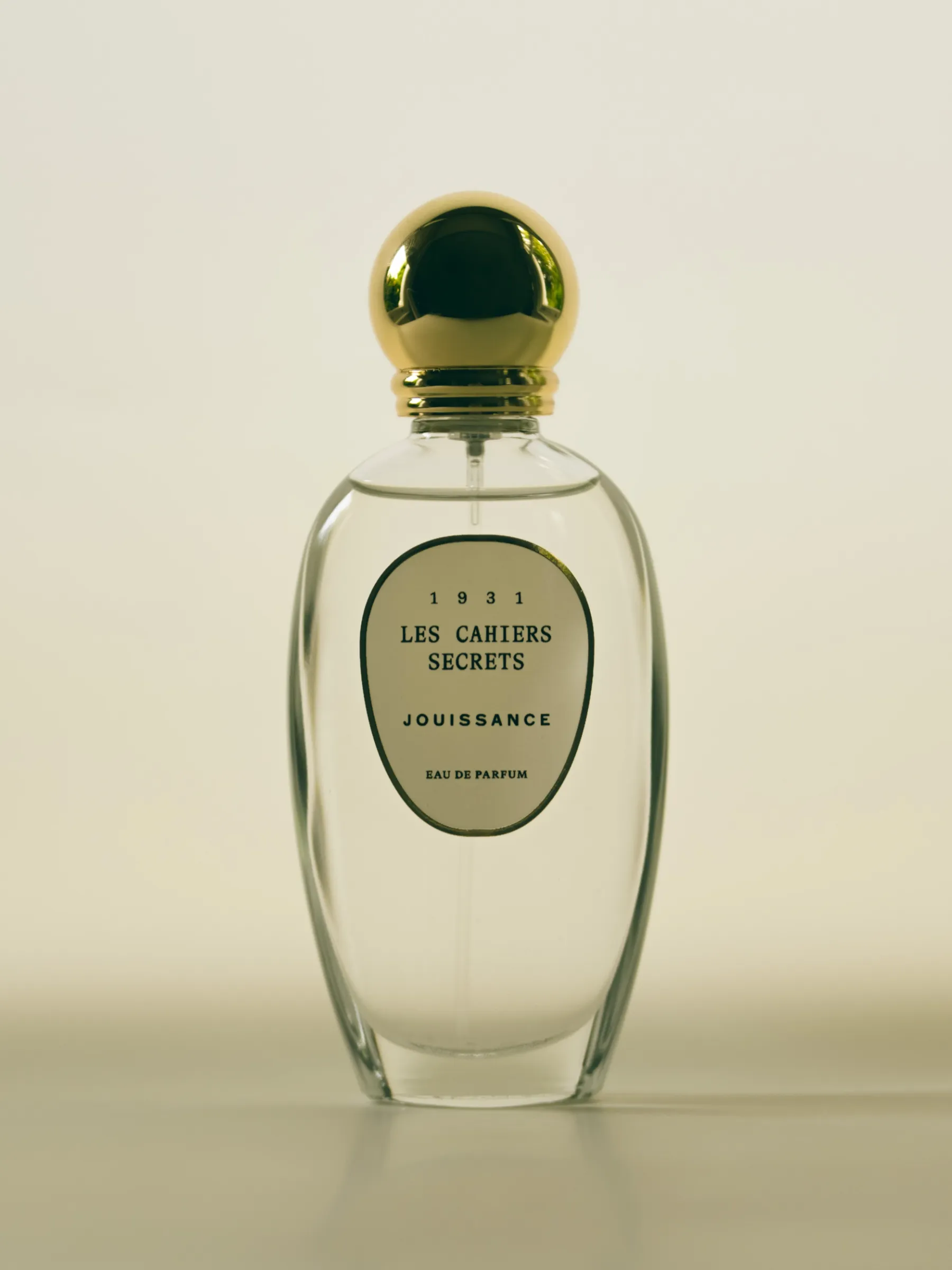
"It was while writing a Diary that I discovered how to capture living moments," Anaïs Nin wrote. "In the Diary I only wrote of what interested me genuinely, what I felt most strongly at the moment, and I found this fervour, this enthusiasm produced a vividness which often withered in the formal work. Improvisation, free association, obedience to mood, impulse, brought forth countless images, portraits, descriptions, impressionistic sketches, symphonic experiments, from which I could dip at any time for material."
In tribute to Anaïs Nin, one of our foremost inspirations for Jouissance, our DIARY captures our most treasured moments, our obsessions and preoccupations, our research and the lessons we learn, and the work of our cherished friends and collaborators.